

Beyond Lightweighting: Withstanding the Test of High Temperatures
During flight, a launch vehicle must withstand complex thermal environments. The ascent phase involves aerodynamic heating caused by high-speed flight, while the return phase subjects the vehicle to severe aerothermal loads. Balancing the lightweight advantages of carbon-fiber structures with structural safety under complex thermal conditions is therefore a critical challenge that must be addressed in the engineering application of all-carbon-fiber launch vehicles.
Carbon-fiber composites consist of carbon fibers and a resin matrix. While carbon fibers themselves possess excellent heat resistance, the resin matrix is more temperature-sensitive and may begin to soften and lose strength when temperatures exceed 150°C. Therefore, the core task of the thermal protection system is to block external heat and ensure that, by the time heat reaches the back side of the carbon-fiber structure, the temperature remains within the range that the resin matrix can safely withstand. 130°C was therefore the key temperature-control criterion for this test.
To address this technical challenge, WELIGHT conducted the thermal protection test. The test used a thermal protection panel coated with a thermal protection layer on the surface of the carbon-fiber panel. A high-power quartz-lamp heating array was then used to simulate the thermal environment encountered during launch vehicle flight, with particular focus on evaluating the system's thermal insulation capability, ablation resistance, and structural temperature-control performance.

Figure: Thermal Protection Test Panel with Thermal Protection Coating Applied
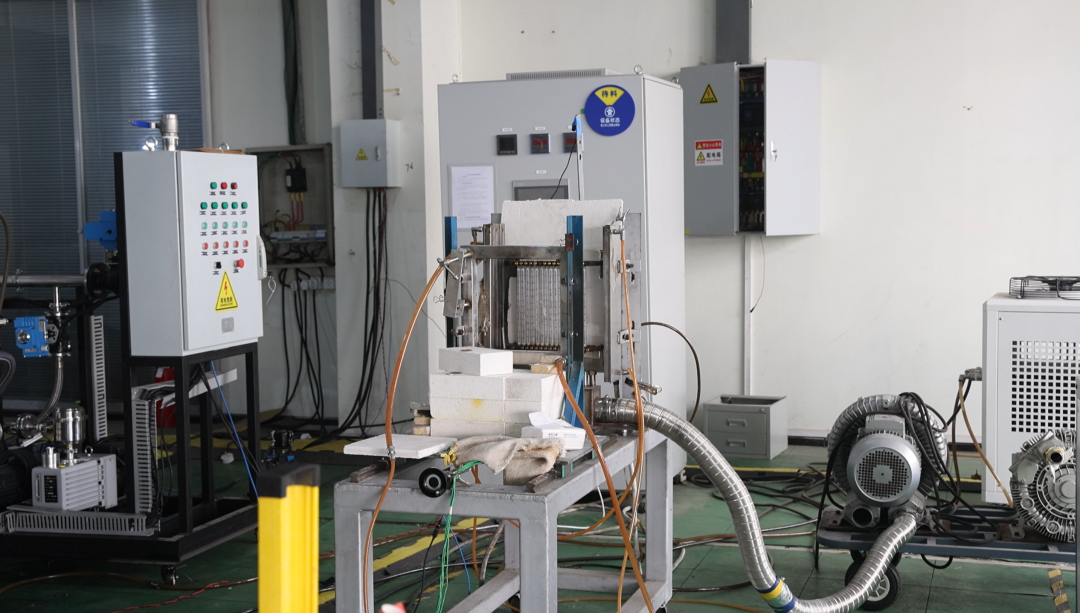
Figure: High-Power Quartz-Lamp Heating Array Simulating Extreme Heat-Flux Loads

Figure: Thermal Protection Test Panel Undergoing High-Temperature Testing
During the test, the technical team used temperature sensors to monitor in real time the temperature on the back side of the carbon-fiber panel and at the interface between the panel and thermal protection layer. The team evaluated heat-transfer behavior and thermal protection performance while also monitoring thermal protection effectiveness, back-side temperature control, ablation depth, interfacial debonding, and cracking or deformation of the thermal protection material, providing a basis for subsequent optimization of the thermal protection solution and structural safety assessment.
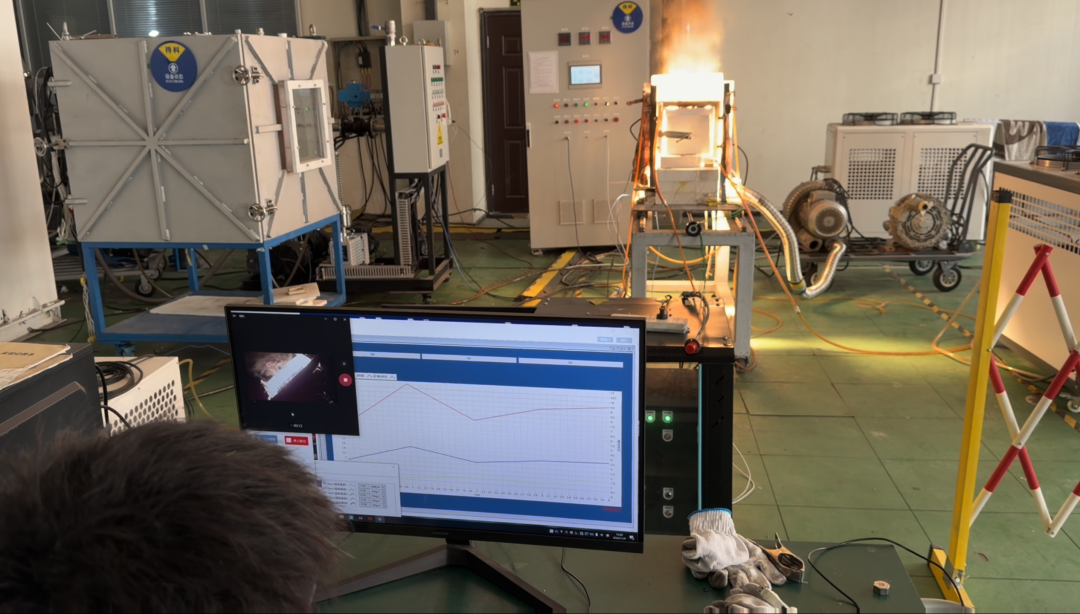
Figure: Technical Personnel Monitoring Test Data in Real Time
The test results showed that the thermal protection material can withstand the thermal-load conditions encountered during the launch vehicle's ascent and recovery phases. Under the test thermal environment, the maximum temperature of the carbon-fiber panel met the requirement of no more than 130°C, achieving the expected test objectives.

Figure: Thermal Protection Test Panel After High-Temperature Thermal Environment Testing
This means that, with a properly designed thermal protection system, carbon-fiber structures can meet the mechanical and thermal-environment requirements of launch vehicle flight while protected by thermal protection materials, providing important measured data and practical evidence for subsequent optimization of the vehicle's thermal protection solution.
From “Material Feasibility” to “Engineering Readiness”
Thermal Protection Moves Toward Engineering Application
For a launch vehicle, thermal protection is not simply a matter of protecting the material surface. It is a systems-engineering challenge involving material performance, structural design, and adaptability to the thermal environment. For an all-carbon-fiber launch vehicle in particular, the thermal protection system must effectively block external heat and control structural temperatures while also accounting for material-interface bonding, structural integrity, and overall lightweighting requirements.
The successful completion of this test marks an important step forward in WELIGHT's validation of thermal protection technologies for all-carbon-fiber vehicle structures. Based on the test data and validation methods obtained, the team will continue to iterate and optimize the onboard thermal protection solution for WELIGHT-1, strengthening launch vehicle flight safety and supporting subsequent validation of reusable technologies.

Making a launch vehicle lighter is not merely a matter of material selection. Enabling it to fly farther, return more safely, and ultimately achieve reusability is a demonstration of comprehensive systems-engineering capability.
Looking ahead, WELIGHT will continue to advance key technologies and system-level engineering validation for all-carbon-fiber launch vehicle structures. Through coordinated innovation in material applications and systems engineering, the company will continue pushing the technical boundaries of lightweighting, low cost, and reusability for commercial launch vehicles, exploring new technological pathways for the development of China's commercial space industry.
Editor: Zhao Jiaqi
Proofreader: Chi Chunyang