

In today's increasingly competitive commercial space landscape, R&D speed and innovation efficiency determine a company's future. Recently, the 3D-printed coaxial shear injector collaboratively designed by WeLight, UAE-based computational engineering company Leap71, and Shanghai Astack Technology Co., Ltd. has been successfully delivered!
This is a critical milestone in the development of the "Blaze-1" LOX/methane engine, and a landmark event in the rapid translation of cutting-edge global "AI + computational engineering" technologies into physical engineering hardware.
The successfully designed injector is the core component of the main combustion chamber of the Blaze-1 full-flow staged combustion engine. It features an advanced coaxial shear design, offering significant advantages including excellent propellant mixing, high combustion efficiency, uniform thermal loading, simplified structure, and superior manufacturability.
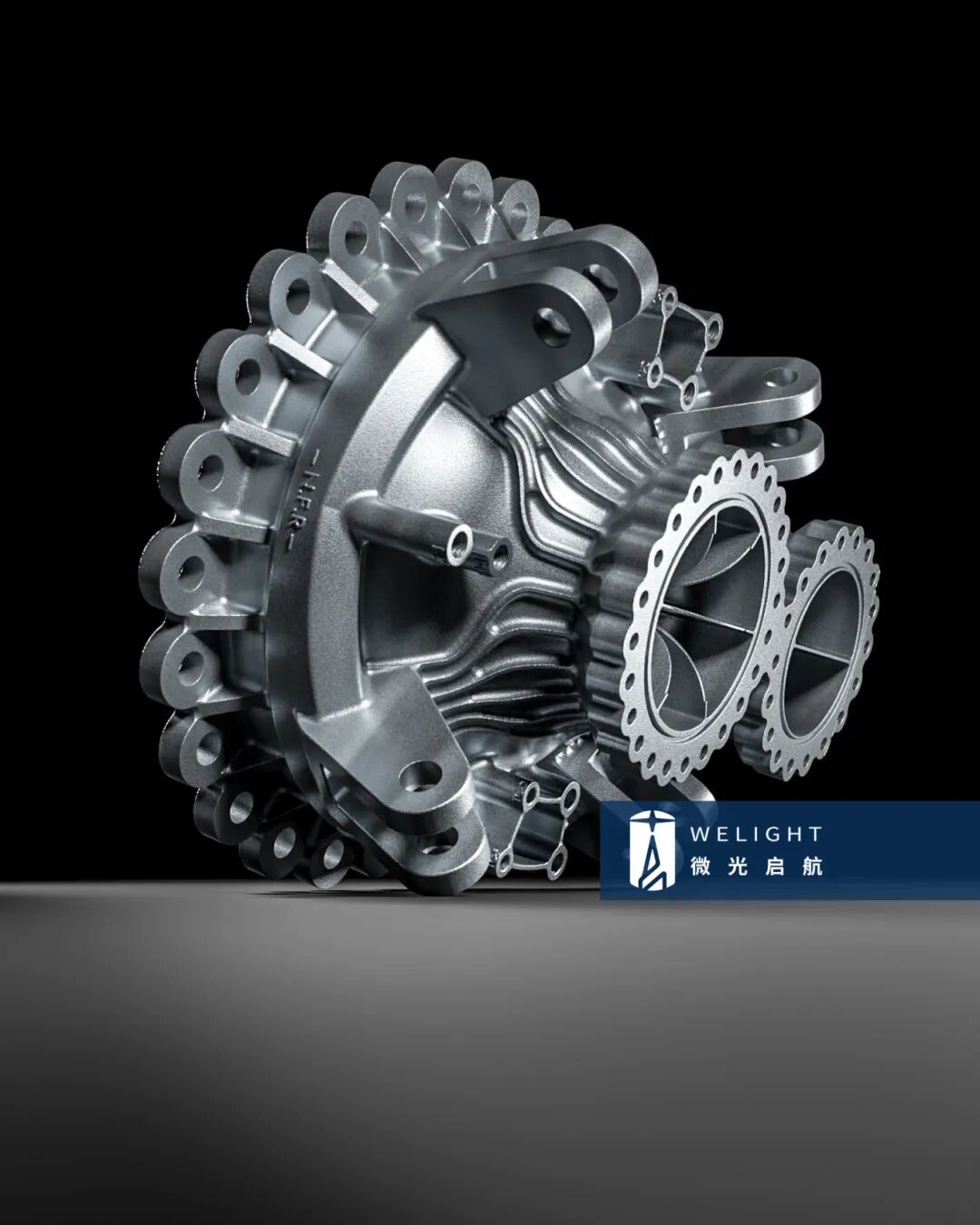
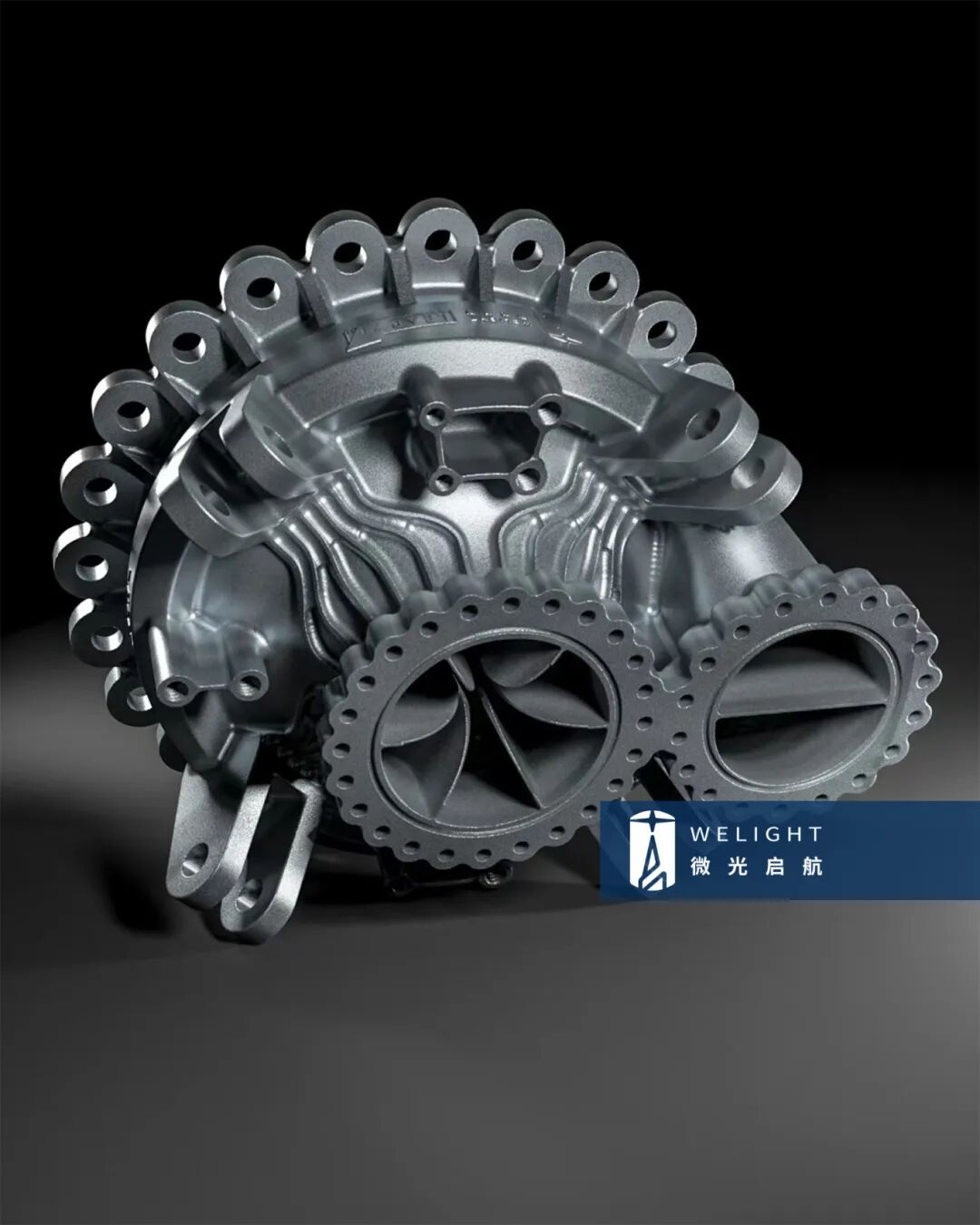
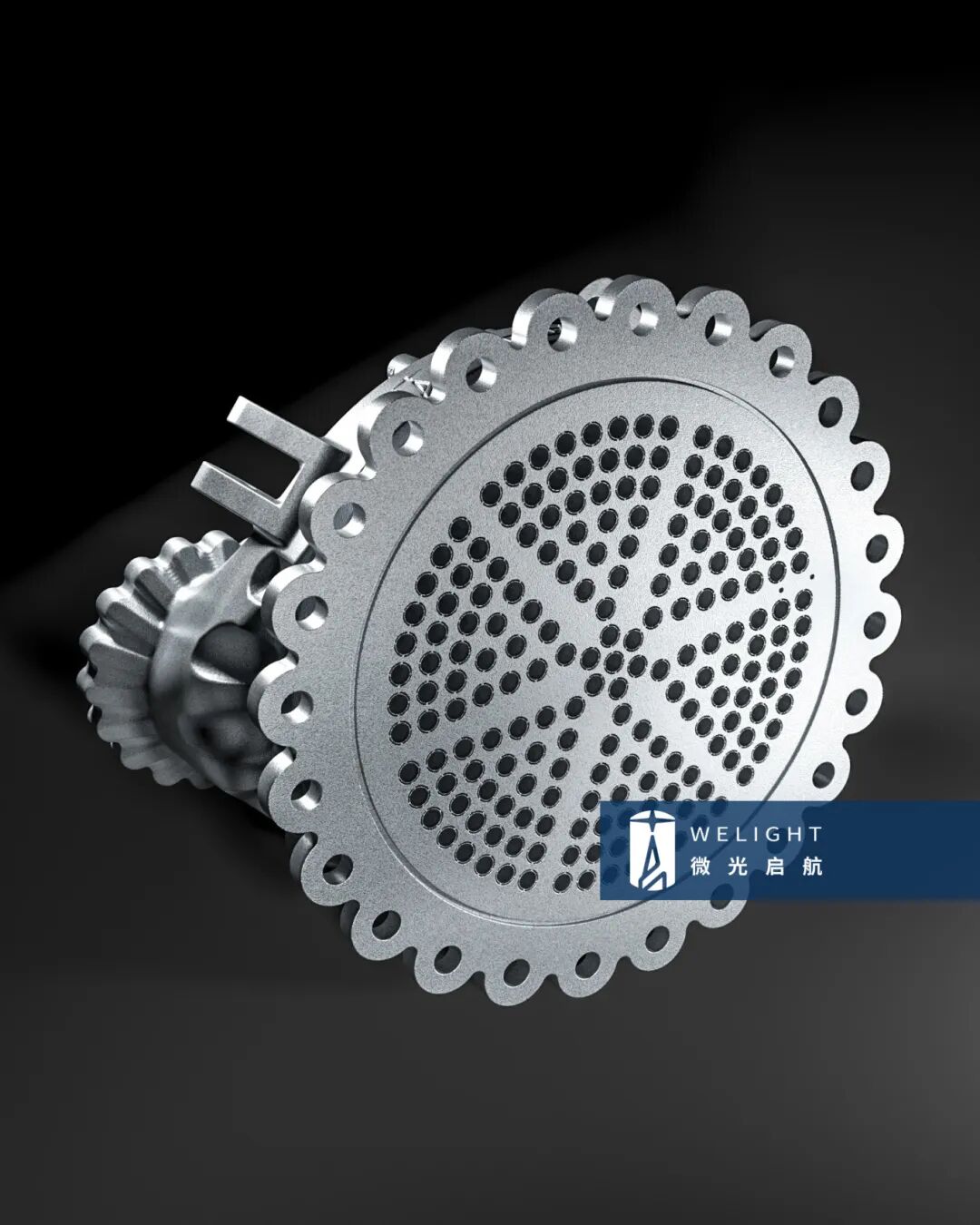
01 PART Efficient Mixing, Ultimate Combustion Through high-velocity shearing between radial fuel-rich gas and axial oxygen-rich gas, a highly turbulent mixing flow field is formed before entering the combustion chamber – significantly enhancing combustion efficiency and delivering more powerful thrust for the engine. 02 PART Uniform Thermal Loading, Stable and Reliable The innovative design achieves more uniform heat load distribution across the combustion chamber wall and injector faceplate, greatly enhancing engine operational stability and service life. 03 PART Integrated Structure, Lightweight and Robust The integrated design simplifies the overall structure, effectively reducing engine weight while maintaining strength – a key factor in achieving high-performance rockets. 04 PART 3D Printing, One Step Ahead The injector's geometry is inherently compatible with 3D printing technology. Its superior manufacturability dramatically shortens production cycles and significantly reduces manufacturing costs – laying a solid foundation for rapid rocket iteration and commercial application.
The successful delivery of this injector was made possible through deep collaboration with Leap71 and Astack. Leap71's revolutionary computational engineering models enabled WeLight to rapidly optimize massive design parameters through AI-driven processes in the digital world – exploring optimal configurations beyond the reach of traditional methods, and directly interfacing with advanced 3D printing manufacturing.
The sea of stars begins at our feet. This small injector embodies our relentless pursuit of technological innovation and commercial value. It proves that WeLight, by integrating global expertise, has the capability to transform cutting-edge technology into tangible rocket thrust.
Looking ahead, WeLight will continue to deepen international collaboration, pressing the "accelerator" on rocket R&D with AI, and delivering more efficient and reliable space transportation solutions to the global market.
What do you think about the transformation AI technology is bringing to commercial space? Feel free to leave your thoughts in the comments!