
From Successful Ignition to Stable Operation
Long-Duration Verification Marks the Real Turning Point
The preburner is often described as the "pacemaker" of a rocket engine. By burning a small amount of propellant, it generates high-temperature, high-pressure gas to drive the turbopumps, which in turn supply high-pressure propellants to the entire engine. Its performance directly determines whether the propulsion system can operate stably.
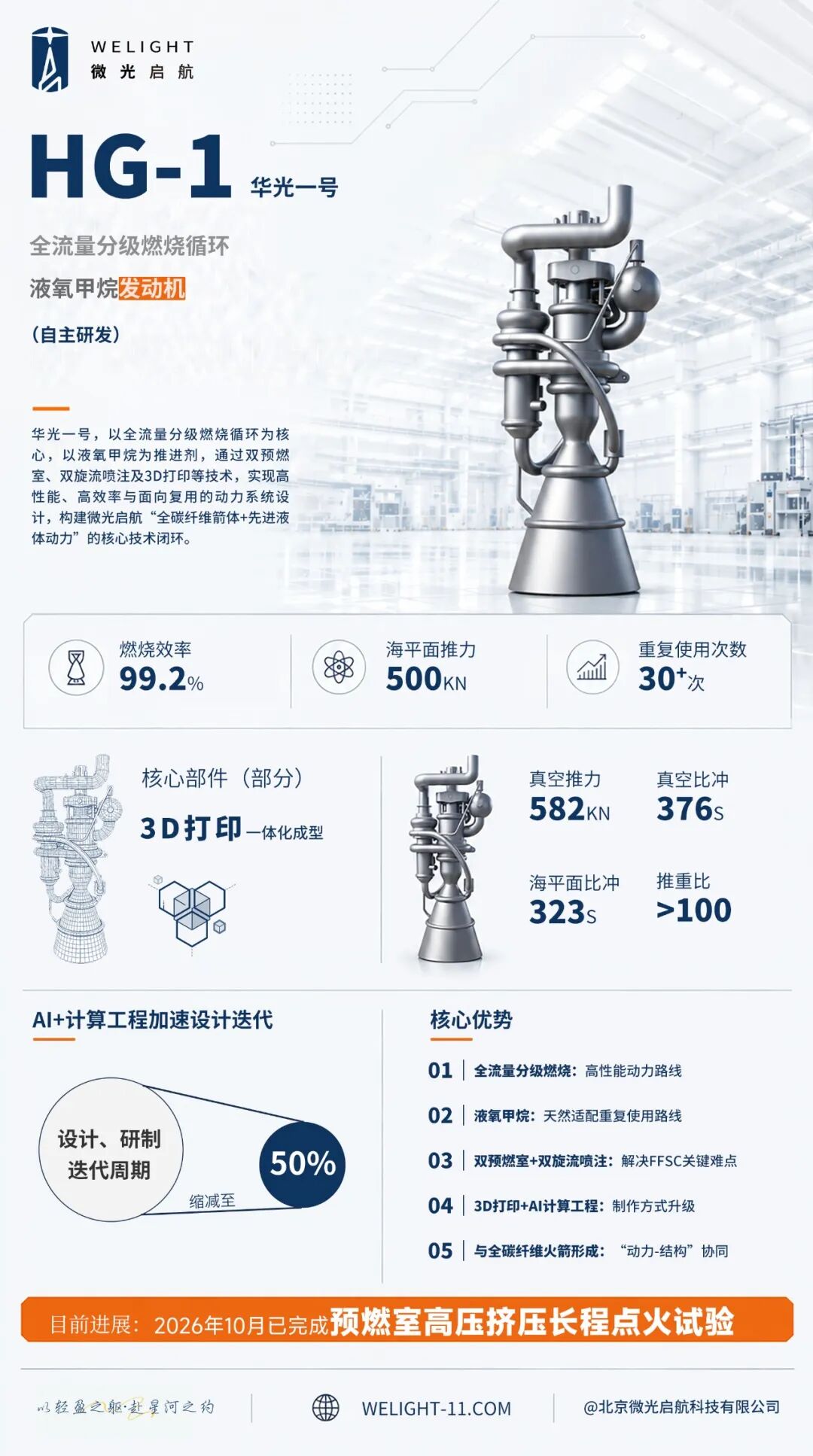
For HUAGUANG-1, the preburner is even more critical. A full-flow staged-combustion cycle employs two independent preburners—one fuel-rich and one oxygen-rich. The two propellant streams pass through their respective preburners before entering the main combustion chamber for combustion. This architecture can reduce turbine temperature and thermal loads at the same power level, making it a preferred solution for achieving both high performance and reusability. However, its technological advantages come with demanding engineering challenges: two preburners, two turbopumps, and highly precise timing and control systems are tightly coupled, meaning that disturbances in any single element can affect the operation of the entire propulsion system.
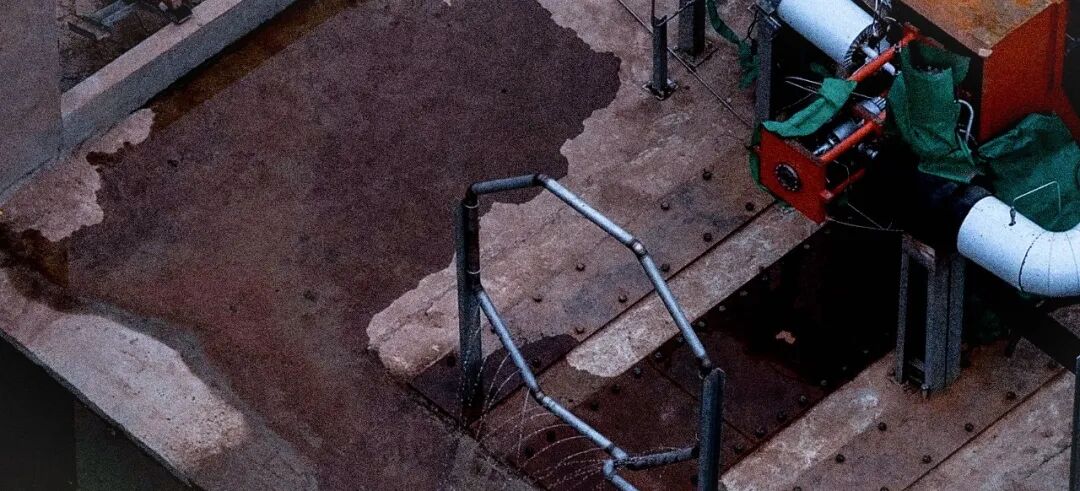
Photo: HUAGUANG-1 preburner ready for testing
For this very reason, . Preburner operation involves multiple processes, including propellant injection, atomization and mixing, stable combustion, and long-duration thermal protection. For the development team, successful ignition is only the first step. The true engineering challenge is whether the component can sustain combustion, withstand the prolonged thermal environment, and maintain structural integrity over time.
The previous short-duration ignition test provided an initial validation of preburner ignition, startup, and short-duration combustion. This long-duration test goes a step further. In addition to examining the ignition and startup process, it . It represents a critical leap from initial functional validation to verification of sustained long-duration operating capability, while also laying an important foundation for subsequent system integration and full-engine hot-fire testing.
Let the Data Speak
Long-Duration Testing Provides Critical Data for Design Iteration
This long-duration ignition test focused on the preburner's sustained operating capability, with particular attention paid to its operating characteristics under long-duration conditions. The test provides important data for subsequent combustion-stability analysis, thermal-protection design assessment, and structural-reliability verification.
From injector cold-flow testing to short-duration ignition and now long-duration verification, WELIGHT's R&D team has continued to advance key preburner technologies, steadily deepening its understanding of preburner operating characteristics and behavior.
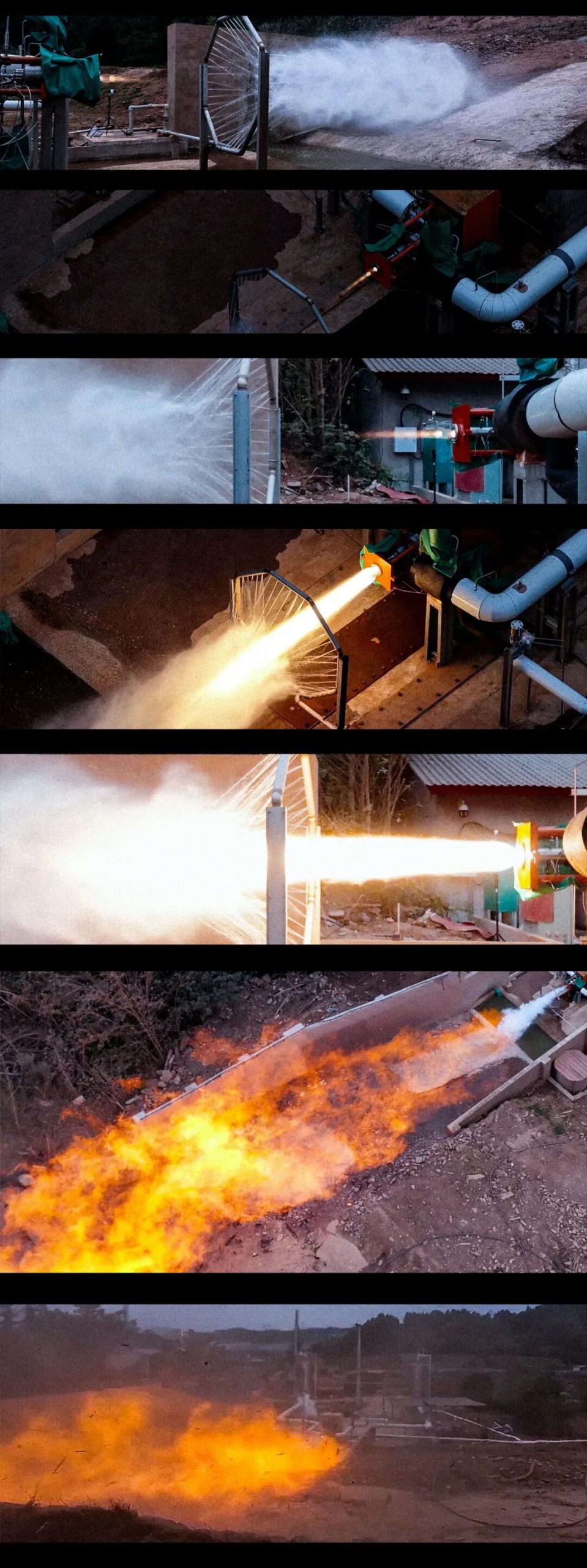
Photo: Multi-angle and multi-stage images from the HUAGUANG-1 preburner high-pressure long-duration ignition test
The data accumulated during this long-duration test further expands the preburner's verification envelope, providing important support for subsequent design optimization, performance evaluation, and system-level testing. It also marks steady progress in engine development toward becoming "predictable, optimizable, and engineering-ready."
Focused on Full-Flow Staged-Combustion Technology
Advancing Steadily Toward Full-Engine Hot-Fire Testing

The full-flow staged-combustion cycle is one of the most advanced technical architectures for liquid rocket engines today, offering both high-performance and reusable potential. Its successful engineering implementation depends on highly efficient coordination among critical components such as preburners and turbopumps, placing demanding requirements on system design, component performance, and overall development capability.
The successful completion of this long-duration preburner ignition test represents another important milestone in the development of HUAGUANG-1's critical components and creates favorable conditions for subsequent engine-system integration and comprehensive verification. Next, WELIGHT will continue to deepen test-data analysis and key technology validation, steadily advancing component development and system integration as it progresses toward the full-engine hot-fire test of the HUAGUANG-1 full-flow staged-combustion liquid oxygen/methane engine.
Validate design through testing and drive iteration with data. WELIGHT will continue advancing core liquid rocket engine technologies and contribute propulsion innovation to the high-quality development of China's commercial space industry.
Editor: Zhao Jiaqi
Proofreader: Gu Haochao