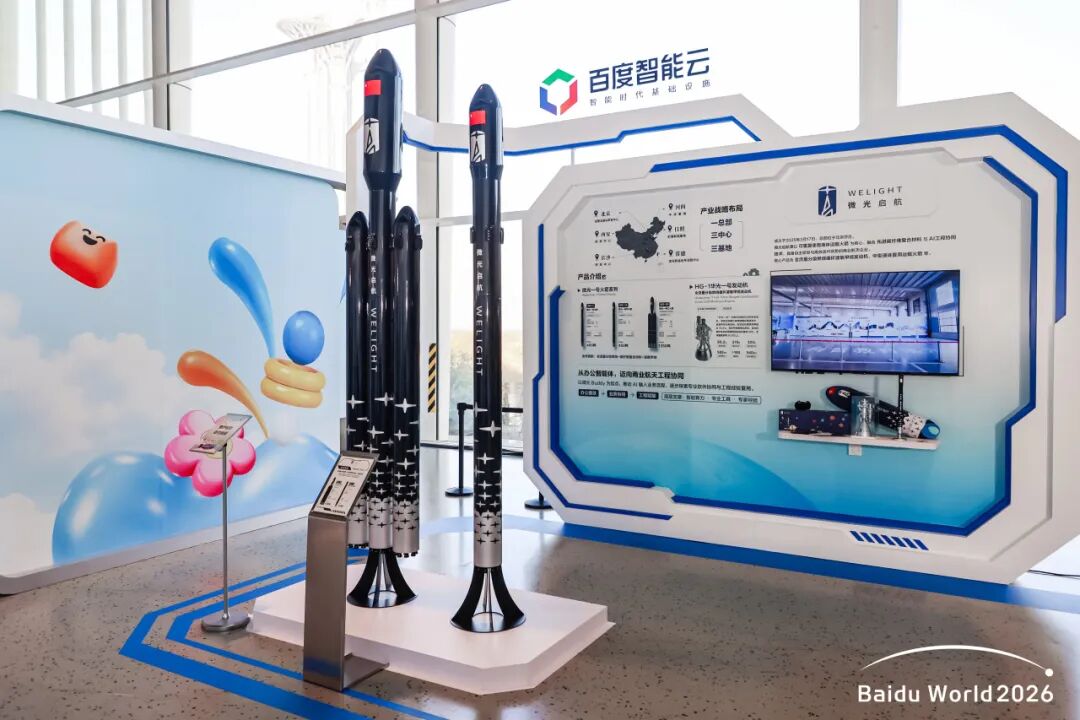
Figure: WELIGHT Booth at Baidu World 2026
From Intelligent Office Work to Engineering Collaboration
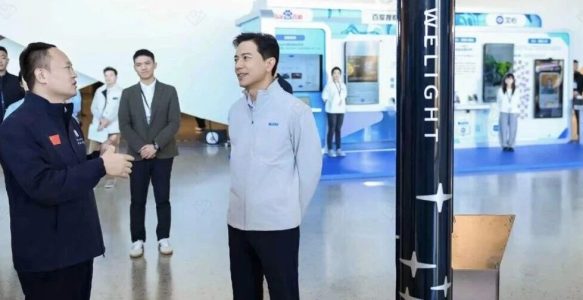
During the conference, Baidu founder Robin Li visited the WELIGHT booth and held an in-depth discussion with WELIGHT founder, Chairman and General Manager Gao Huan, focusing on pathways for integrating artificial intelligence with commercial spaceflight.
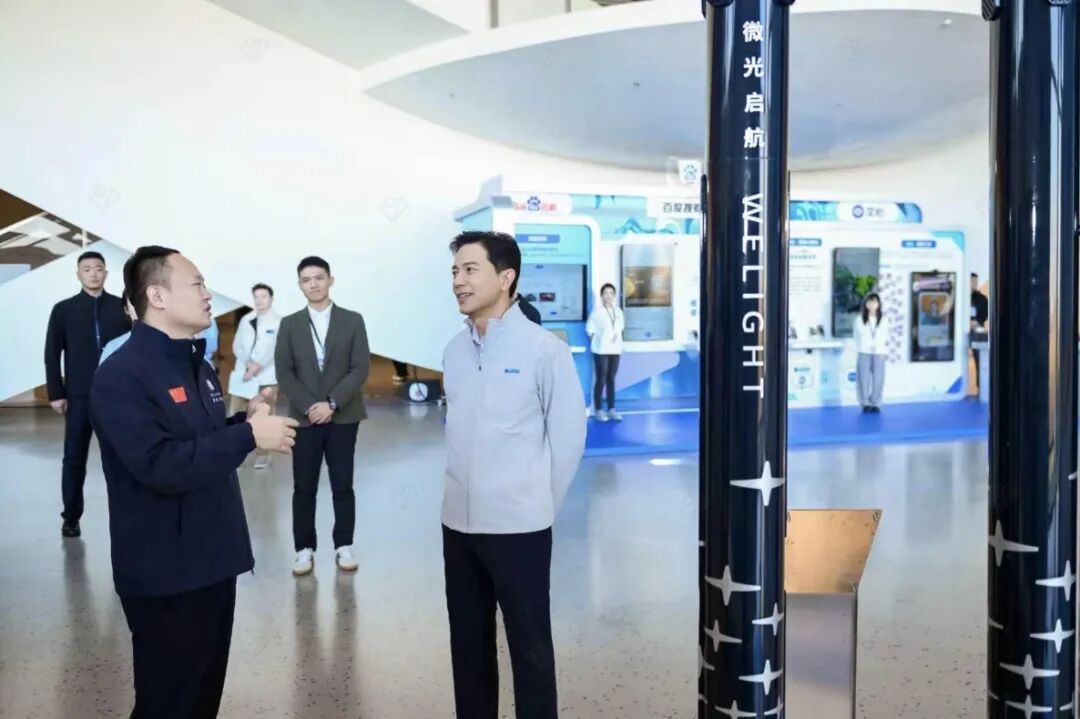
Figure: Baidu Founder Robin Li in an In-Depth Discussion with WELIGHT Founder Gao Huan
During the discussion, Gao Huan introduced WELIGHT's technology roadmap in commercial spaceflight and its AI application practices. He noted that, for WELIGHT, AI is not merely a tool for improving efficiency, but a future-oriented organizational capability. Enabling AI to understand the business, integrate into workflows, participate in collaboration, and work together with professional tools and engineers' expertise so that intelligent technologies can truly serve complex engineering practice is an important direction for WELIGHT as it moves toward intelligent aerospace manufacturing.
WELIGHT Buddy, the company's independently developed office AI agent, made its first public appearance at the conference. It already supports the generation and editing of documents, spreadsheets, and presentations, as well as information retrieval and recruitment assistance. Internal pilot use is also underway to support employees in handling routine tasks.
For engineering R&D, WELIGHT is taking composite materials as a key entry point. Focusing on critical stages of composite-material development and manufacturing, the company is exploring the application of AI in process optimization, quality inspection, and engineering analysis, while deepening industrial collaboration to transform professional expertise and data resources into engineering capabilities that can be continuously accumulated and reused.
In aerodynamics, the company will explore the integration of AI with computational fluid dynamics (CFD) and high-performance computing, conducting research on aerodynamic performance prediction, simulation acceleration, and design optimization; in structural engineering, it will explore collaboration between AI, professional analysis, and engineering calculation tools to assist with computational preparation, solution comparison, and result verification; in electrical engineering, the company will progressively identify engineering tasks suitable for AI participation based on the practical needs of professional teams.
These explorations will be driven by real engineering challenges, promoting collaboration among large models, specialized algorithms, and engineering software. By combining engineering data with physical mechanisms, WELIGHT will develop surrogate models for specific tasks and domain-specific models, gradually building analytical, predictive, and optimization capabilities tailored to commercial spaceflight. The effectiveness of these models and applications will be continuously validated through simulation, testing, and real-world missions, while critical engineering conclusions will be reviewed and confirmed by professional personnel, enabling the continued accumulation and reuse of engineering data, model capabilities, and professional expertise.
Synergistic Innovation in Materials and Propulsion for WELIGHT-1
At the conference, WELIGHT also showcased its WELIGHT-1 series of all-carbon-fiber launch vehicles, presenting the company's technology roadmap in materials, propulsion, and manufacturing processes.
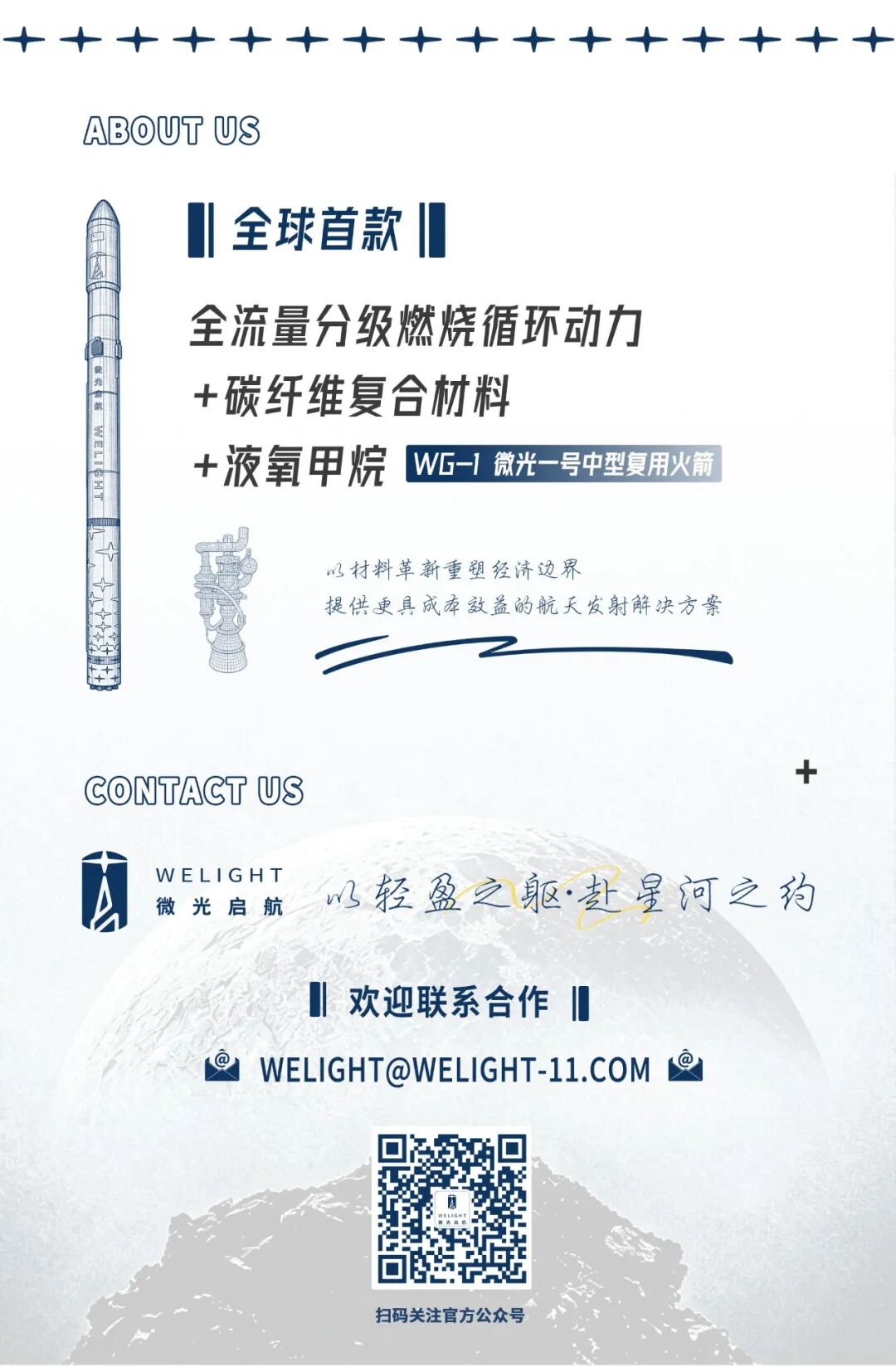
WELIGHT-1 is the world's first medium-lift reusable liquid launch vehicle to integrate three core technologies: full-flow staged-combustion propulsion, carbon-fiber composite materials, and LOX/methane propellants. It adopts a T800-grade all-carbon-fiber linerless tank architecture and is powered by the Huaguang-1 full-flow staged-combustion LOX/methane engine, enabling greater payload capacity at the same vehicle mass and access to higher orbits.
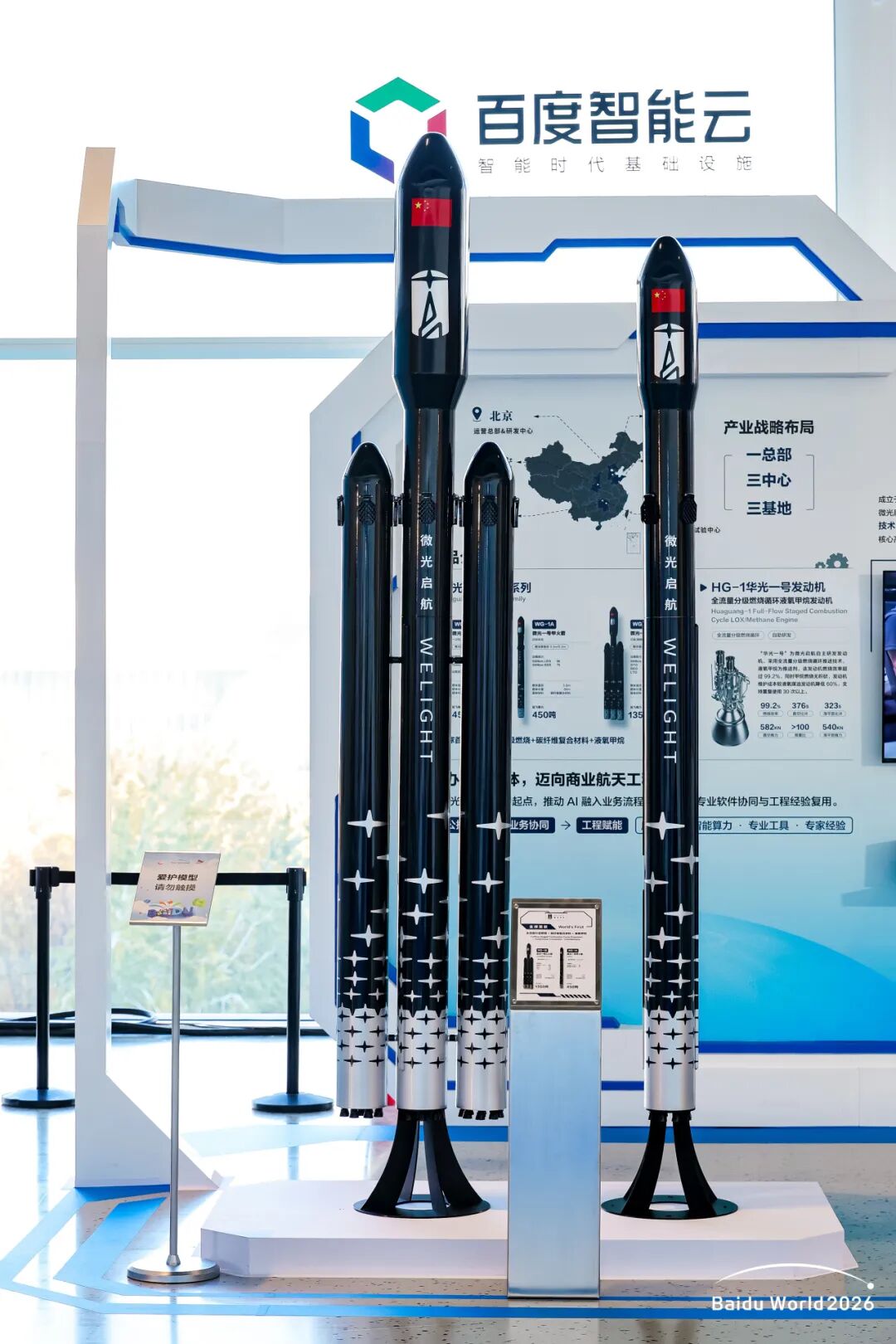
Figure: WELIGHT-1 All-Carbon-Fiber Launch Vehicle Models / WELIGHT-1 Yi (left), WELIGHT-1 Jia (right)
In engineering practice, WELIGHT is also advancing the integration of AI with computational engineering and advanced manufacturing processes. Empowered by AI technologies, the gas-gas injector of the Huaguang-1 engine has achieved a significant improvement in the intelligent development of core propulsion components, laying an engineering foundation for future scaled and batch production.
Advancing Continuous AI Application Through Real Engineering Tasks

From office collaboration to professional engineering, WELIGHT will continue to address real-world needs in launch vehicle design, manufacturing, testing, and quality management by promoting deeper integration among AI, professional tools, and engineering expertise. The company will explore applications in process optimization, quality inspection, engineering analysis, and design optimization, while combining engineering data with physical mechanisms to develop surrogate models and domain-specific models.
Looking ahead, WELIGHT will continue to deepen industrial collaboration and build capabilities across data, models, computing platforms, and applications. With the participation of professional teams, research outcomes will be validated through simulation, testing, and real-world missions, enabling data resources and professional expertise to be transformed into engineering capabilities that can be accumulated and reused, providing sustained support for commercial space R&D and manufacturing.
Editor: Zhao Jiaqi
Proofreader: Gu Haochao