Fiber Placement Path Planning Process Test
Shaping the Rocket’s “Load-Bearing Body”
As the rocket’s largest load-bearing structure, WELIGHT’s all-carbon-fiber tank can achieve a 30% reduction in structural weight. The core challenge of the fiber placement path planning process test is how to lay tens of thousands of fiber tows layer by layer with precision, stability, and controllability.
To verify how different fiber placement processes affect the forming quality of the tank dome, WELIGHT carried out fiber placement path planning process tests, focusing on no-overlap, half-overlap, and full-overlap configurations and their effects on dome forming quality, while also comparatively validating constant-angle, zoned, and geodesic path-planning methods. The tests covered representative fiber placement angles of 0°, 25°, and 45°, providing evidence-based answers to this core technical challenge through rigorous experimental design.
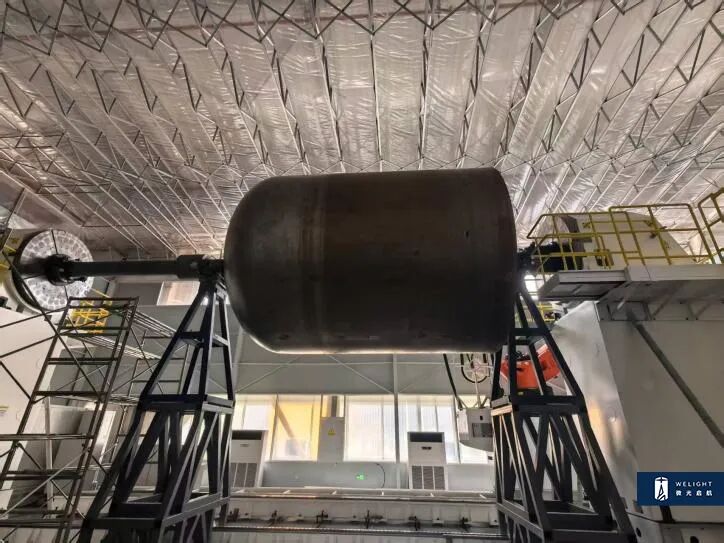
Photo: Mold installation method
The test results showed that different overlap configurations have distinct effects on layup thickness and forming quality. Based on the test data and forming quality assessment, the subsequent tank dome layup overlap scheme is planned to adopt a no-overlap configuration, further improving layup forming quality and process stability. This marks a key step forward for WELIGHT in answering the critical question of how to achieve high-quality fiber placement.
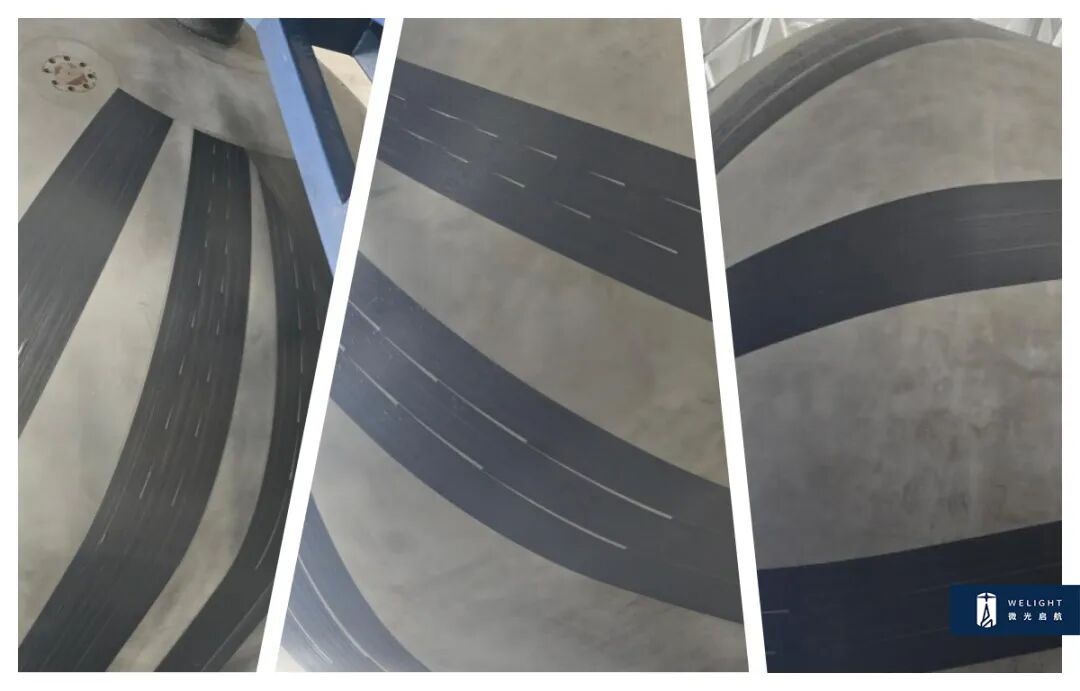
Photo: Comparison of no-overlap, half-overlap, and full-overlap paths at 0°, 25°, and 45°
For fiber placement path planning, the test systematically compared three path strategies: constant-angle, zoned, and geodesic. The evaluation showed that each approach offers distinct advantages in different application scenarios and fiber placement characteristics. Going forward, WELIGHT will closely integrate internal-pressure strength analysis with actual product requirements, continuously iterate and optimize the process, and ultimately determine the optimal path-planning solution to establish the most suitable manufacturing process for high-performance tanks.
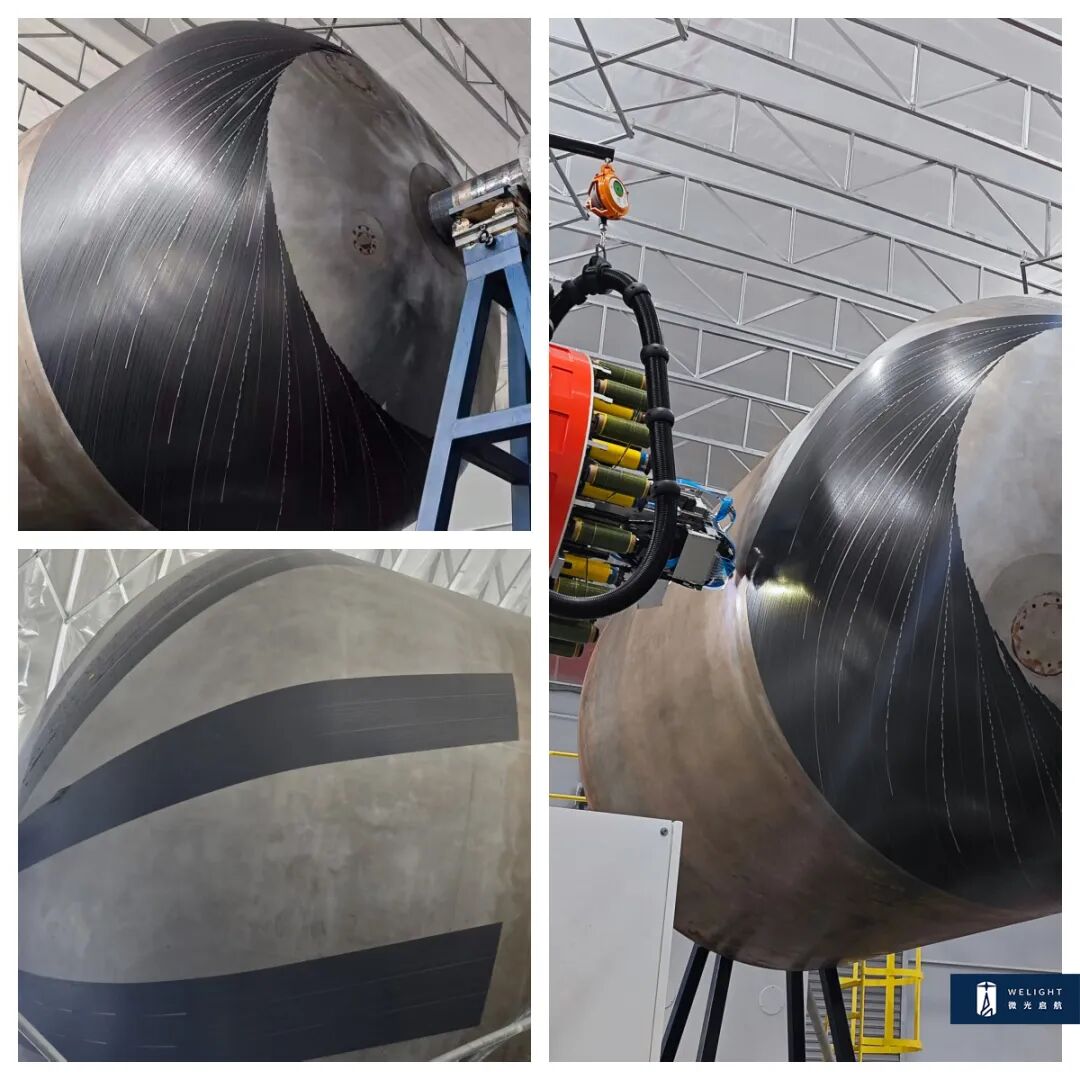
Photo: Results of constant-angle, zoned, and geodesic path-planning process tests
These tests systematically clarified how different fiber placement processes affect tank forming quality, providing solid validation data for subsequent process optimization and product manufacturing. They also laid a strong foundation for tank manufacturing to advance toward greater automation, consistency, and engineering maturity, strengthening WELIGHT’s core competitiveness in high-performance rocket tank manufacturing.
Separation Bolt Release Test
Silent Release Under a 42-Tonne Heavy Load
Stage separation is a critical technology in launch vehicle flight, and even a small amount of unnecessary separation shock can disturb the vehicle’s flight state. In this test, WELIGHT’s non-pyrotechnic separation bolt successfully completed release and separation under a 42-tonne heavy-load condition, systematically validating the product’s reliable separation capability under high-load conditions and demonstrating strong engineering performance.
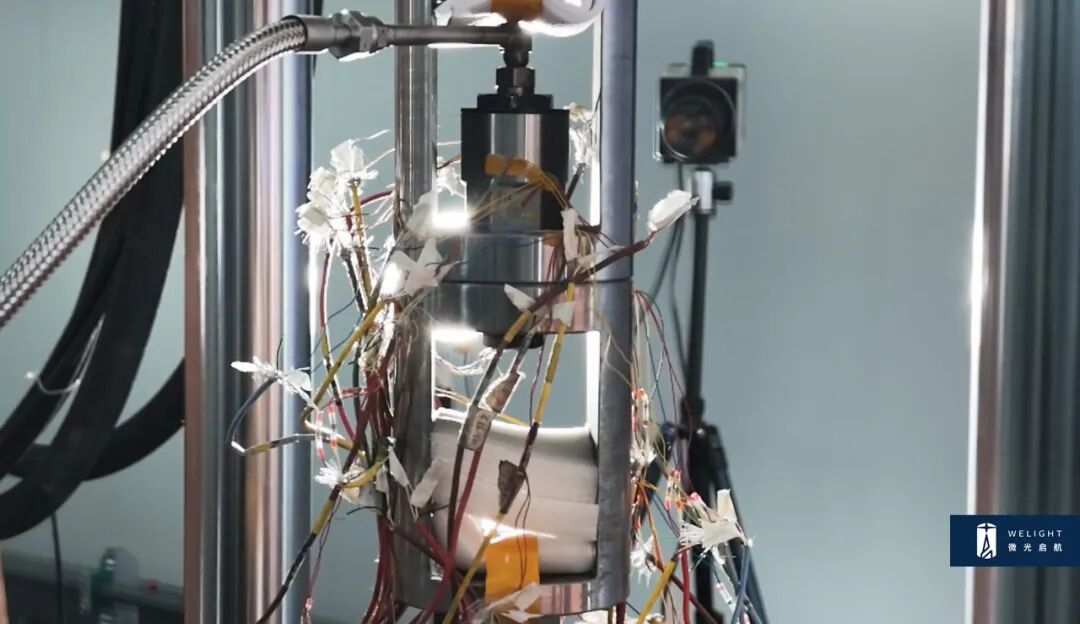
Photo: Preparation site for the separation bolt release test
Compared with pyrotechnic separation bolts of the same specification, WELIGHT’s independently developed non-pyrotechnic separation bolt offers higher load-bearing capacity, easier installation and operation, and pollution-free reusability. It also features no explosive shock, low separation disturbance, strong environmental adaptability, and controllable timed release, effectively reducing the impact of separation shock on the vehicle structure and onboard equipment. This provides a superior technical option for critical operating conditions such as launch vehicle stage separation and further strengthens the technical foundation for the vehicle’s in-flight separation system.
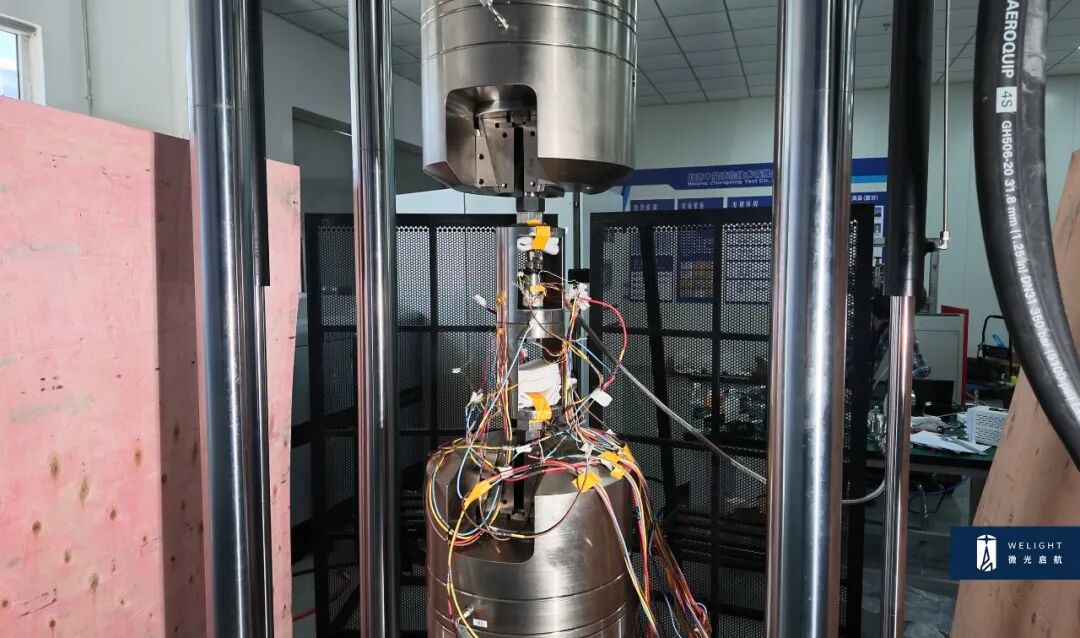
Photo: Separation bolt release test site
Previously, WELIGHT completed 2,000 ground simulation tests of separation and release using its non-pyrotechnic separation bolt, with zero errors and zero failures, fully validating the product’s reliability under complex operating conditions.
Continuing Key Technology Validation
Strengthening the Foundation for Reliable Rocket Flight

The important results achieved in these two tests will provide strong support for the validation and engineering application of key launch vehicle technologies, further improving the maturity and reliability of product development.
WELIGHT will continue to strengthen its technical foundation through rigorous testing and validation, seeking better solutions and improving product capabilities through repeated engineering practice. With sustained technological accumulation, the company will help advance commercial spaceflight toward higher efficiency, lower costs, and greater sustainability, making space exploration increasingly accessible.
Editor | Zhao Jiaqi
Proofreader | Chi Chunyang