

Recently, Beijing WeLight Technology Co., Ltd. (hereinafter referred to as "WeLight") officially signed a strategic cooperation agreement with Shanghai Astack Technology Co., Ltd. and Leap71, a leading computational engineering company based in the UAE. The partnership will bring Leap71's cutting‑edge "AI + computational engineering" technologies into the auxiliary design of WeLight's self‑developed "Blaze‑1" full‑flow staged combustion cycle engine, which powers the company's core product – the "Spark‑1" launch vehicle. This marks WeLight's international debut on the commercial space stage and represents a solid step forward in the company's global‑vision commitment to its twin‑driven R&D philosophy of "technological innovation and commercial value."

Photo: Lin Kayser (Founder, Leap71), Josefine Lissner (Leap71), Gao Huan (Founder, WeLight), and Lin Yiyi (Founder, Astack)
AI Is Not an Option – It’s a Necessity in Commercial Space
As global commercial space competition intensifies, R&D efficiency and innovation speed have become the decisive factors for core competitiveness. Traditional design methods are increasingly hitting efficiency bottlenecks, while the deep integration of "AI and commercial space" is no longer a forward‑looking exploration – it is an inevitable industry trend. For WeLight, AI adoption is not a choice, but a strategic imperative that will determine its future market position. This partnership with Leap71 is a firm response to this trend – by integrating world‑class technological resources and reshaping the R&D paradigm from the design stage, WeLight aims to ensure that the Spark‑1 rocket achieves internationally competitive performance and cost efficiency.
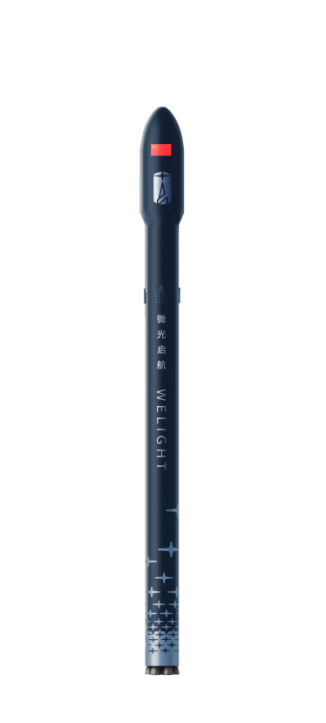
Photo: Spark‑1 Launch Vehicle
A "Tech Handshake" from Beijing to Dubai
As a commercial space enterprise driven by both technological innovation and commercial value, WeLight is dedicated to providing low‑cost, highly reliable launch solutions for the global market. The Spark‑1 rocket – the company's flagship product for the future satellite launch market – derives its performance and competitiveness from its powerful "heart": the Blaze‑1 liquid rocket engine.
Leap71 enjoys a global reputation for its revolutionary "computational engineering" models, whose AI‑driven design methodologies can dramatically accelerate the design and optimization of complex physical systems. This cooperation leverages Leap71's leading advantages in high‑end manufacturing sectors such as aerospace, with Shanghai Astack providing synergistic support. Together, the three parties will build a "Technology Silk Road" across Asia, perfectly blending cutting‑edge international algorithms with Chinese engineering expertise and manufacturing potential – injecting innovation momentum into the Blaze‑1 engine.
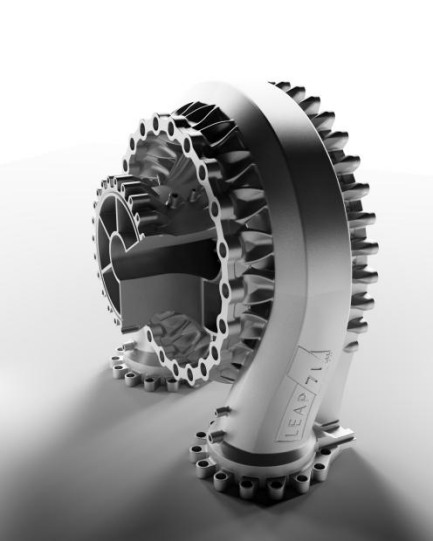
Photo: Engine components designed via AI + computational engineering (Source: Leap71 / Astack))
AI‑Powered Reinvention of the Rocket's "Heart" R&D Paradigm
Traditional liquid engine design cycles are long and trial‑and‑error costs are high, making them a critical bottleneck in rapid launch vehicle iteration. Leap71's AI design platform will infuse the Blaze‑1 engine R&D with new "computing power" and "intelligence." The technology enables:
-
Ultra‑large‑scale parameter optimization: Rapidly identifying design solutions with the best performance and highest reliability across a vast set of variables, breaking through the limits of human experience, and fundamentally enhancing the reliability of the Spark‑1 rocket.
-
Dramatically shortened R&D cycles: Compressing design and simulation iteration processes that previously took months into days or even less – pressing the "accelerator" on rocket engine rapid iteration and finalization, ensuring the Spark‑1 can respond to market demands faster.
-
Unlocking native innovation potential: Exploring configurations and breakthroughs that are difficult to achieve through traditional methods via generative design, delivering step‑change improvements in engine performance.
All of this means the Spark‑1 launch vehicle will have a smarter, more powerful, and more reliable "heart" – its comprehensive performance indicators and market competitiveness will achieve a qualitative leap.
Strategic Elevation: Building a New Space Ecosystem with a Global Vision
For WeLight, this cooperation goes beyond technology import – it carries multiple strategic implications:
- The official launch of our globalization strategy. We firmly believe that technological progress stems from openness and collaboration, and that top‑tier innovation emerges from cross‑disciplinary integration. By going global and integrating the world's finest innovation resources, WeLight demonstrates its determination to build a globally competitive presence.
- A cornerstone for win‑win international partnerships. The successful cooperation with Leap71 and Astack builds a bridge of trust for attracting more international technology partners and expanding overseas launch service markets in the future.
- Deep implementation of our core R&D philosophy. By introducing global frontier technologies, WeLight not only pursues the pinnacle of technological innovation but is also committed to building launch vehicles of outstanding commercial value – delivering trusted launch services to both domestic and international markets.
Co‑Creating the Future: Empowering "Aerospace Intelligent Manufacturing," Serving Global Markets
This strategic partnership with Leap71 and Astack is a major milestone on WeLight's path to globalization and a proactive blueprint for the future. We firmly believe that the future of commercial space belongs to those who are first to embrace intelligence. We look forward to the brilliant spark of "AI + aerospace" under this tripartite collaboration, successfully empowering the development of the Blaze‑1 engine and the Spark‑1 rocket – making WeLight's innovation shine brightly across the vast expanse of the global commercial space landscape, and ultimately realizing the grand vision of providing innovative, efficient space transportation services to the world.